Predictive maintenance for electric motors: Unlocking reliability through data
Article
Unplanned motor failures silently erode industrial productivity with downtimes costing an average of $125,000 an hour. Even though this is an avoidable obstacle, more than one in five industrial organizations still rely on costly, run-to-fail maintenance approaches.
Electric motors power critical industrial operations and consume nearly 70% of industrial electricity. Despite their importance, motor failures are a leading cause of unexpected downtime, disrupting productivity, supply chains, safety and customer trust. Traditional reactive or preventive maintenance often reacts too late or wastes resources on unnecessary work. And in an age where availability is critical, a smarter, strategic approach is essential, and this is where predictive maintenance (PdM) steps in to transform maintenance from a routine task to a strategic business advantage.
PdM harnesses real-time and advanced analytics, enabling facility managers and OEMs to detect emerging issues before failures occur. Rather than fixed schedules or reactive fixes, PdM continuously monitors motor health to ensure timely, necessary interventions.
Strategic importance of PdM in electric motor applications
Electric motors are vital across industries, including manufacturing, energy, logistics and data centers. Operational processes are reliant on electric motors; a failure rarely affects only one area, often halting production lines and causing costly bottlenecks.
Predictive maintenance is valuable due to several key factors:
- High operational criticality: Electric motors often drive essential processes. A failure in a single motor can halt entire production lines, delay shipments and lead to severe financial penalties or lost revenue. In industries where downtime can affect product safety or regulatory compliance, the severity of operational failures is significantly amplified.
- Progressive wear and tear: Bearings, windings and insulation degrade gradually from mechanical stress, thermal cycling and environmental factors. Without continuous condition monitoring, deterioration remains unnoticed until major failure occurs.
- Energy consumption and efficiency: Motors that are aging or operating under suboptimal conditions draw excess power, increasing operational costs and carbon footprints. With sustainability becoming a core business objective for many organizations, ensuring motors run efficiently supports both financial and environmental goals.
- Cost of unplanned downtime: Beyond direct repair costs, unplanned outages incur lost production, labor inefficiencies and potential contractual penalties. The impact on supply chains and customer networks can hinder an organization’s reputation.
Clean and dry stator windings and insulation are critical for long motor life. Predictive maintenance uses various techniques, including electrical signature analysis, vibration analysis and thermal imaging, to identify early signs of stator winding issues like insulation degradation, overheating and short circuits.

By adopting a PdM model, organizations shift from fixed-interval or run-to-fail approaches to condition-based maintenance. This enables timely, data-informed interventions that minimize operational risks, improve overall equipment effectiveness and support broader business objectives.
Key technologies and techniques powering predictive maintenance
The power of PdM lies in leveraging a suite of advanced technologies designed to monitor and analyze motor health in real time. Together, this creates a multi-dimensional view of equipment condition, transforming raw data into actionable insights.
Vibration analysis plays a foundational role, detecting early signs of mechanical imbalance, misalignment or bearing wear through shifts in frequency and amplitude. Complementing this, thermographic imaging and embedded temperature sensors capture heat signatures that reveal distress from electrical faults or lubrication failures.
Motor current signature analysis (MCSA) dives into the electrical profile, identifying issues like rotor bar defects or eccentricity, often before mechanical symptoms arise. Ultrasound monitoring adds another layer of precision, detecting high-frequency sound anomalies linked to bearing lubrication issues or electrical arcing that might go unnoticed by other sensors. In motors with lubrication systems, oil analysis provides critical clues about wear and contamination through periodic sampling.
Tying it all together, IoT-connected sensors and edge computing devices process this data at or near the source, accelerating response times and reducing bandwidth loads while integrating seamlessly into centralized monitoring systems. Together, these technologies form a comprehensive diagnostic ecosystem, offering far greater accuracy and foresight than traditional maintenance methods.
Data collection and intelligent analysis
PdM relies on the thoughtful collection and intelligent interpretation of data. It begins with the strategic deployment of sensors on critical motor components (bearings, shafts, stators and cooling systems) to continuously monitor vibration, temperature, electrical current and ultrasonic signals. These inputs provide the foundation for real-time, condition-based decisions that reflect the true operating state of the equipment.
Effective analysis starts with precision in sensor placement, targeting the area’s most prone to wear and degradation. Consistent data acquisition, whether through continuous streams or periodic sampling, helps establish performance baselines and reveals subtle shifts over time. By integrating multiple types of data, including thermal, vibrational, electrical and acoustic, organizations gain a more complete picture of motor health than any single source could provide.
Smart sensors are an effective, inexpensive, easy-to-install solution that converts traditional motors into smart, wirelessly connected devices. They enable users to monitor the health of their motors and to plan maintenance in advance.
Machine learning algorithms process this information to identify patterns, differentiate between routine operational noise and early signs of failure, and deliver increasingly accurate predictions over time. These insights are then surfaced through real-time dashboards and alert systems that prioritize maintenance needs based on severity and urgency. This allows teams to allocate resources efficiently and intervene only when necessary.
For instance, a mild increase in vibration might seem inconsequential on its own. But when paired with a rising current draw and localized heat buildup, it can point to an impending bearing failure. By recognizing these patterns early, predictive maintenance shifts maintenance strategies from reactive to proactive, reducing risk, improving reliability and extending the useful life of electric motors.
Benefits and ROI
Implementing PdM for electric motors delivers a range of tangible and strategic benefits that extend well beyond basic equipment upkeep. By detecting issues early, PdM minimizes unexpected breakdowns, helping organizations reduce costly downtime and maintain smooth operations. Maintenance efforts become more efficient with interventions triggered only when needed, cutting down on unnecessary inspections, labor hours and part replacements.
This condition-based approach lowers maintenance costs and extends the operational life of motor assets. Addressing wear and tear before it escalates helps keep motors functioning at peak performance for longer, delaying replacements and preserving capital investments. Safety is also improved, as avoiding sudden failures minimizes risks to personnel and equipment.
Properly maintained motors operate more efficiently, consuming less energy and delivering better performance. These gains contribute directly to lower power costs and support sustainability goals by reducing carbon emissions and environmental impact.
Financially, the impact is significant. Studies indicate that predictive maintenance programs can yield up to a tenfold return on investment through reduced repair expenses, improved asset utilization and increased uptime. Just as importantly, these improvements bolster organizational competitiveness, support long-term operational goals and build customer trust through consistent reliability.
Predictive maintenance ultimately reshapes maintenance from a reactive function into a strategic advantage - supporting resilience, efficiency and sustainable growth.
Challenges and strategic considerations
While predictive maintenance offers clear benefits, its implementation presents several challenges. Upfront costs for sensors, analytics tools and workforce training can be significant, requiring organizations to view PdM as a long-term investment rather than a short-term expense.
The large volume of sensor data can quickly become overwhelming without strong data governance and integration strategies. Connecting PdM platforms with existing systems like ERP and CAD tools is essential to maintain data continuity and avoid inefficiencies.
There’s also a need to upskill maintenance teams. As PdM shifts maintenance from manual checks to data-driven decisions, staff must develop competencies in analytics and digital tools. At the same time, increased connectivity through IoT devices introduces cybersecurity risks, making robust protection and monitoring a priority.
Addressing these issues calls for a phased rollout, executive support and change management. With the right strategy, organizations can overcome these barriers and unlock the full potential of predictive maintenance.
Emerging trends shaping the future of PdM
The landscape of PdM for electric motors is rapidly advancing, fueled by smarter technologies and evolving industry demands. AI and deep learning are enhancing failure prediction by recognizing complex behavior patterns and adapting to new conditions, and digital twins offer real-time simulations, allowing proactive diagnostics and scenario planning. Meanwhile, 5G and cloud computing enable faster, scalable data processing and remote collaboration across sites.
PdM supports greener operations by optimizing energy use, minimizing waste, and extending equipment life – driving sustainability. These innovations are expanding access to PdM and amplifying its impact on reliability and efficiency. But adopting PdM isn’t just a tech upgrade, it’s a shift in mindset. Success hinges on collaboration across maintenance, operations and IT and trusting data over fixed schedules. Technology enables the insights, but execution delivers the results.
To maximize ROI, PdM must align with operational priorities. Not all assets require the same level of monitoring. Critical motors may justify full-spectrum diagnostics, while others may only need basic condition checks. A tailored approach, rather than a one-size-fits-all strategy, is key to sustainable, high-impact adoption.
ABB’s role in advancing PdM
Industry leaders like ABB are playing a pivotal role in shaping the future of predictive maintenance. The ABB Ability™ Predictive Maintenance is a top platform that helps plant operators shift from fixed maintenance schedules to dynamic strategies based on real-time asset performance and risk assessment. It combines condition monitoring, advanced analytics and intelligent service planning to deliver data-driven maintenance solutions.
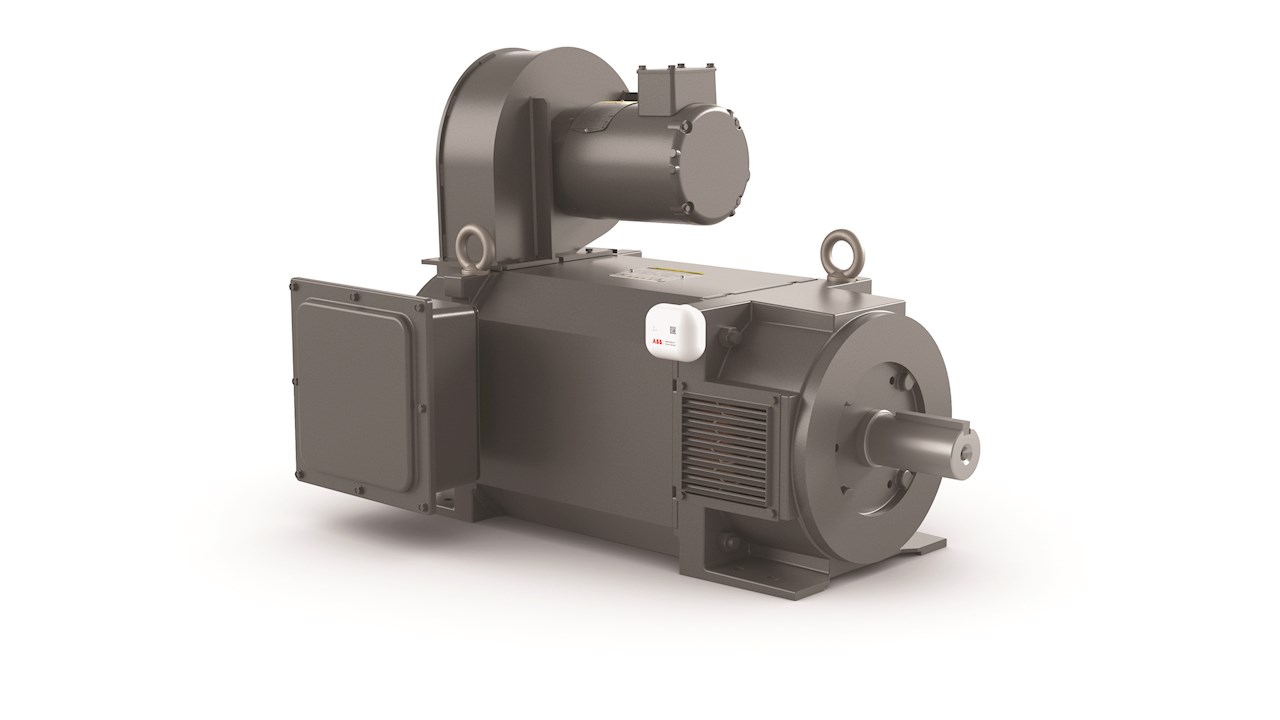
ABB’s approach integrates non-invasive monitoring technologies, machine learning diagnostics and engineering expertise to detect potential failures early, prioritize maintenance by risk severity and optimize resource use. This customizable framework adapts to various industries, budgets and asset lifecycles, whether the goal is to extend critical motor life or improve efficiency in cost-sensitive operations.
Its structured maintenance programs (L1 to L4) guide inspections and repairs, allowing flexibility to postpone major interventions when supported by data. This reduces unnecessary downtime and maintenance without compromising safety.
Overall, ABB Ability PdM improves equipment availability, boosts maintenance team efficiency and lowers environmental impact, helping organizations transform maintenance from a cost into a strategic advantage.
Looking ahead
As industrial systems become more connected, PdM continues to evolve as a fundamental strategy. Advanced forecasting and real-time simulation improve understanding of machine behavior, enabling organizations to prevent failures while optimizing performance, energy use, and asset lifecycle management.
Success, however, depends on more than technology, it requires seamless integration, strong data governance, and collaboration across operations, IT and engineering teams. Investing in talent development, cybersecurity and change management is crucial to fully realize PdM’s potential.
The path forward is clear: PdM is becoming essential infrastructure. With Industry 4.0 adoption accelerating, data-driven asset management will enhance reliability, agility and sustainability across sectors.
Electric motors, critical yet often overlooked, serve as a key example. Embedding intelligence into their maintenance transforms it from a cost center into a strategic advantage, boosting competitiveness and operational resilience.
In this future, predictive maintenance will drive smarter, more efficient and sustainable industrial ecosystems.