AI Self-Driving Labs enable up to 10x faster materials research at Dunia Innovations
Customer stories
Whether it’s green hydrogen or industrial CO₂ utilization, materials research is both a cornerstone and a bottleneck for the energy transition. With an advanced AI Self-Driving Lab ecosystem featuring AI algorithms, robots from ABB Robotics, and precision instruments from METTLER TOLEDO, Dunia Innovations is significantly shortening development cycles, enabling materials innovation that can be scaled up for industrial use.
Bridging the gap between model and reality –that is the mission of Dunia Innovations, a Berlin-based specialist in data-driven materials research. While AI models in the digital world access massive databases curated over decades, such structured, machine-readable data is still largely unavailable in physical materials science. Traditional materials research has typically focused on relatively narrow chemical spaces because exploring larger numbers of possible material combinations is costly and time-consuming. Historical datasets are often fragmented or recorded inconsistently, while manual documentation and labor-intensive experimental workflows remain common in many laboratories.
Next-Generation Closed-Loop Materials Research
To overcome this bottleneck, Dunia combines multimodal AI models with flexible robotics and high precision laboratory instrumentation in a closed-loop AI Self-Driving Lab system that dramatically shortens research cycles. In this process, Dunia’s AI models design new material combinations, which are then validated in experiments. Standardized robotic cells automate key experimental preparation and handling steps with a high degree of consistency. The resulting measurement data is continuously fed back into the algorithms, enabling continuous learning and optimization.
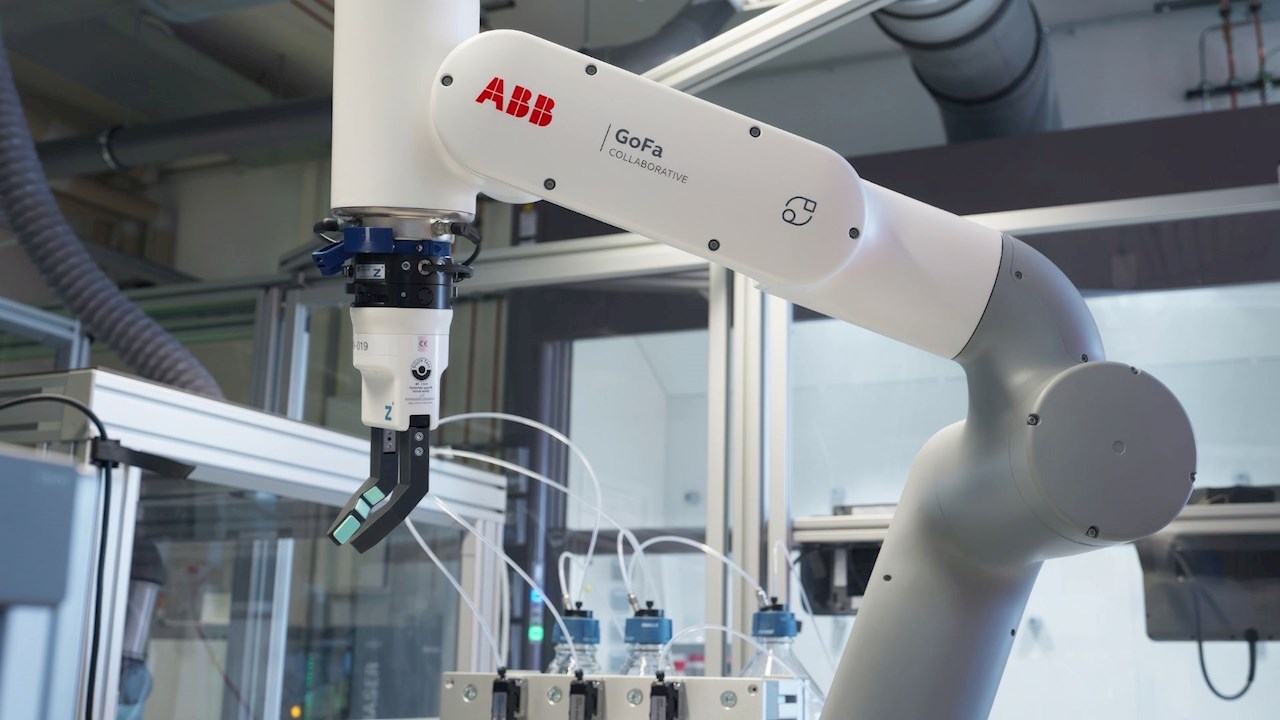
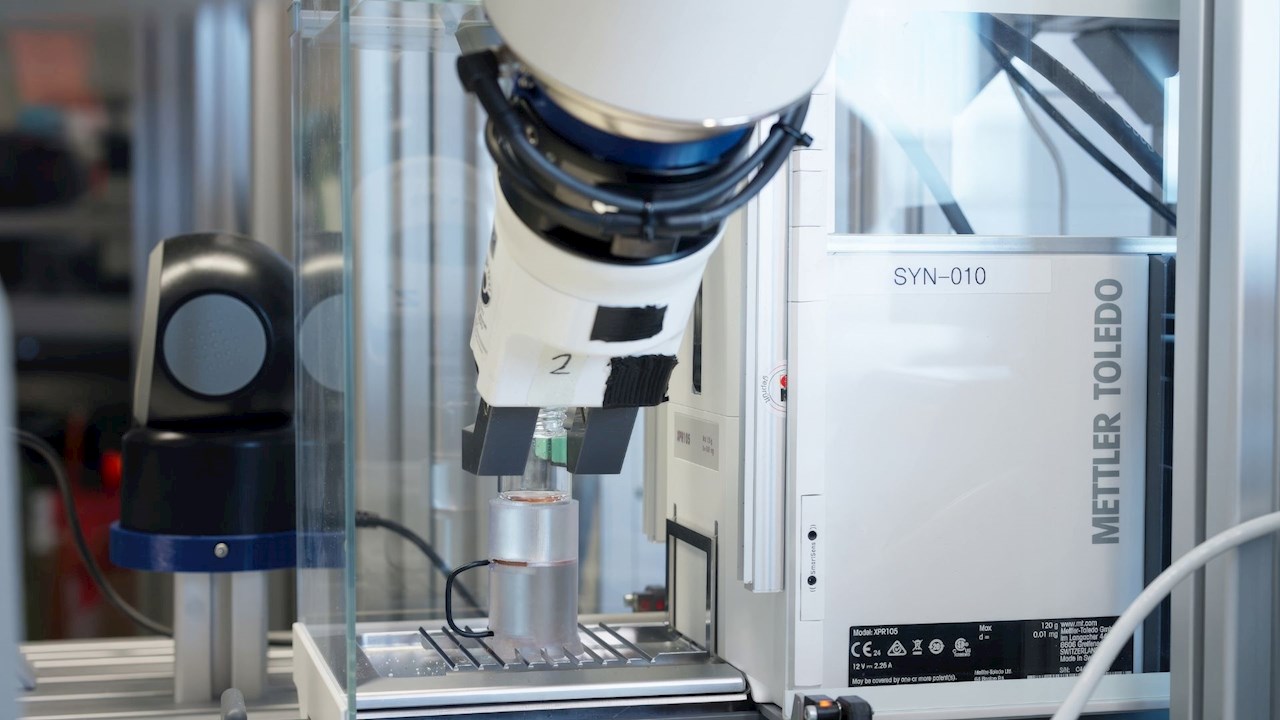
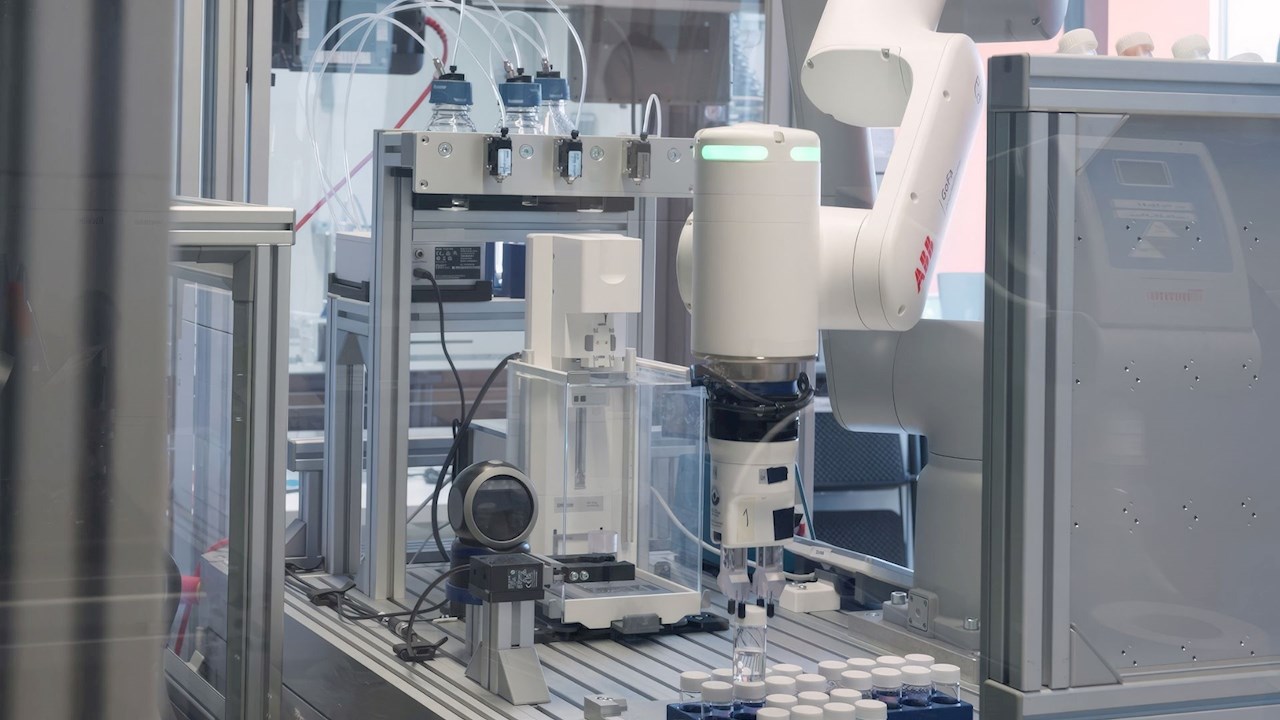
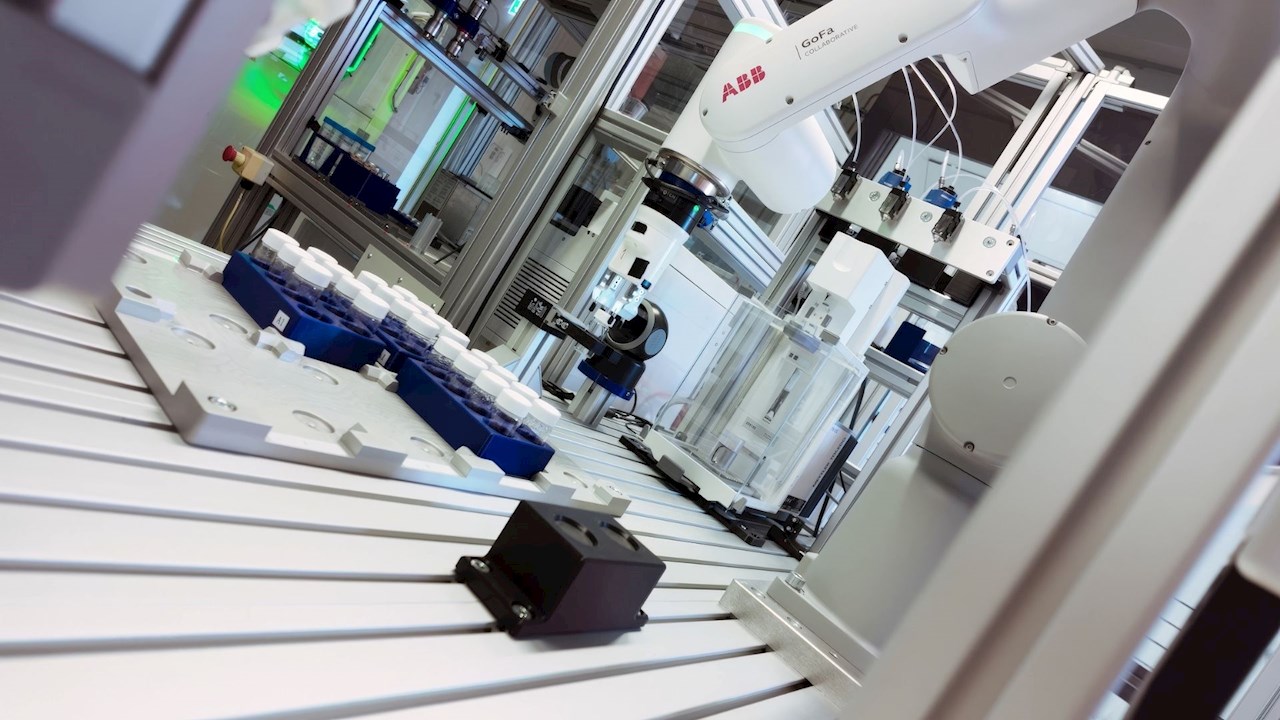
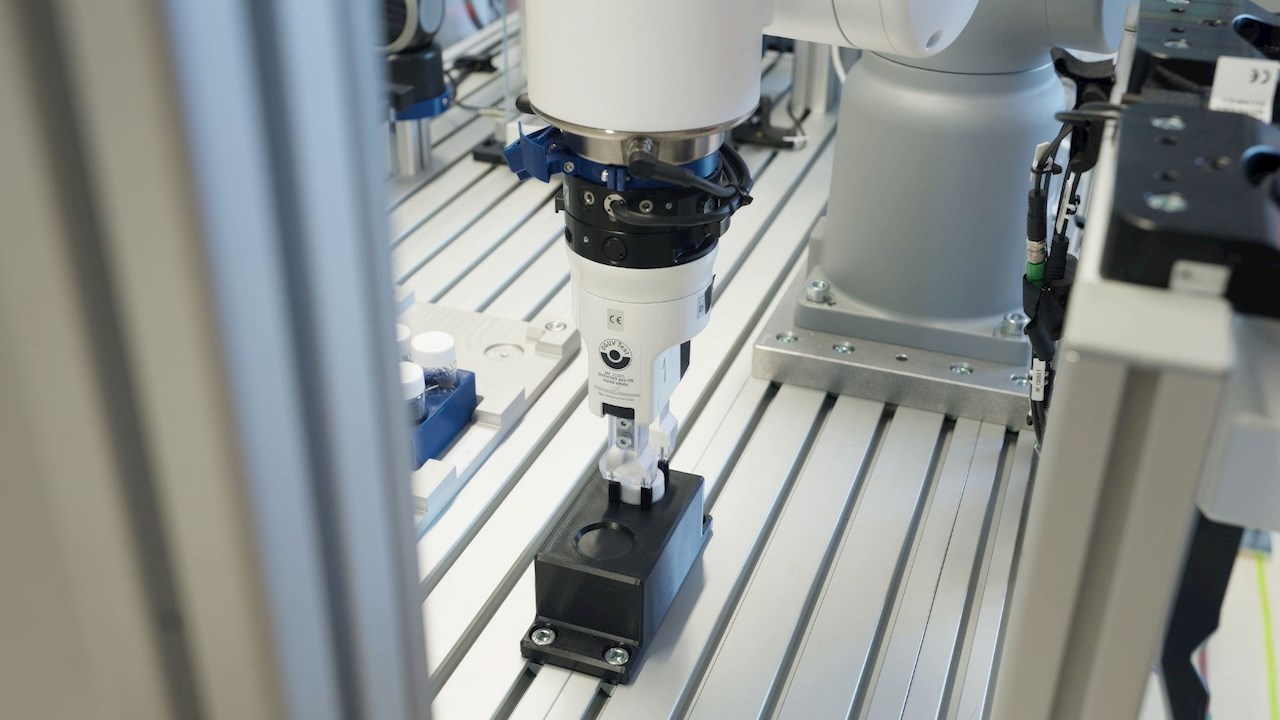
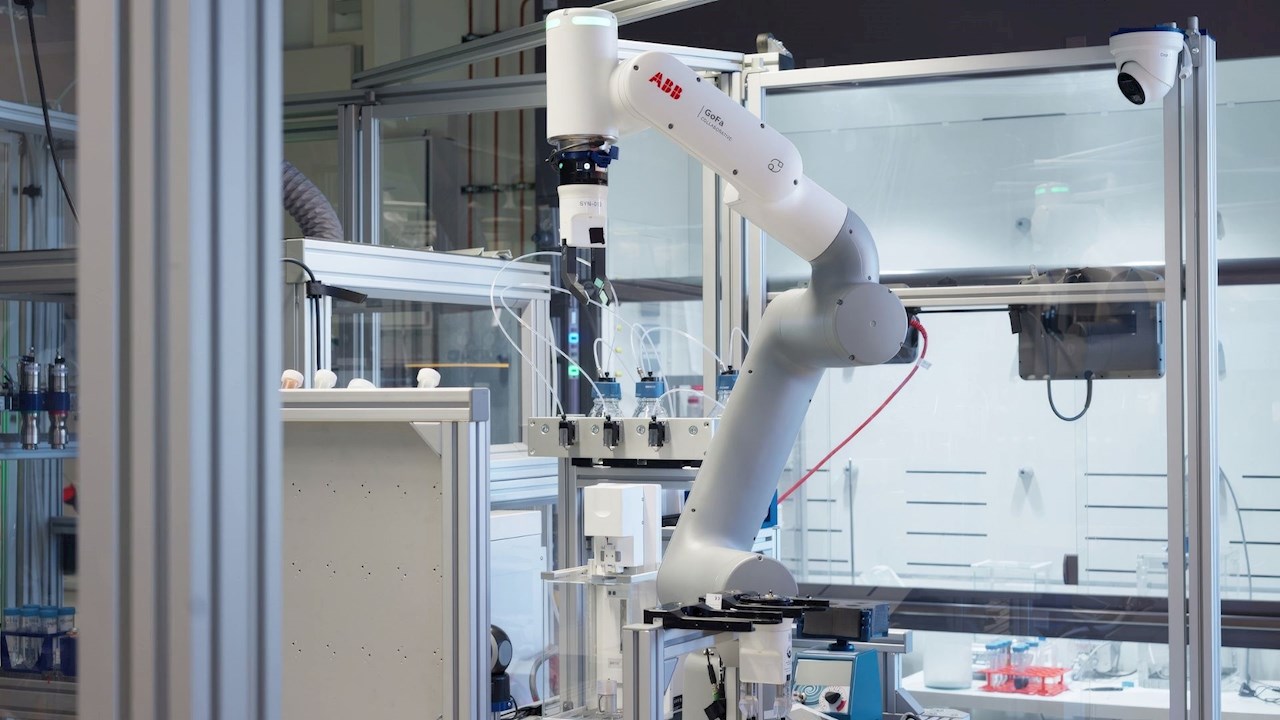
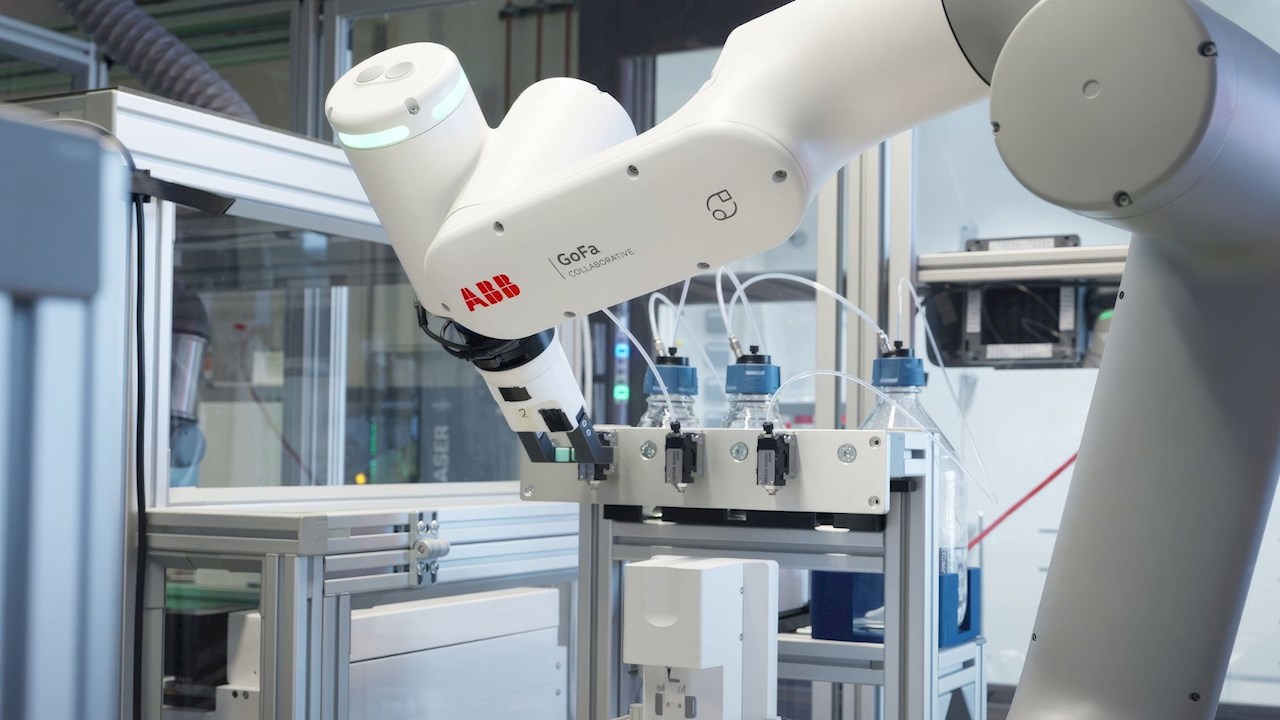
A key component of Dunia’s “Design-Make-Test-Analyze” closed-loop system is a modular robotic cell featuring a collaborative GoFaTM robot from ABB Robotics working in tandem with precision instruments from METTLER TOLEDO. This combination is particularly valuable for laboratory environments, as it combines safe human-robot collaboration, repeatable movements, and rapid adaptation to changing workflows. The compact, clean design and intuitive programming simulated using RobotStudio® software enabled the rapid implementation of the cell.
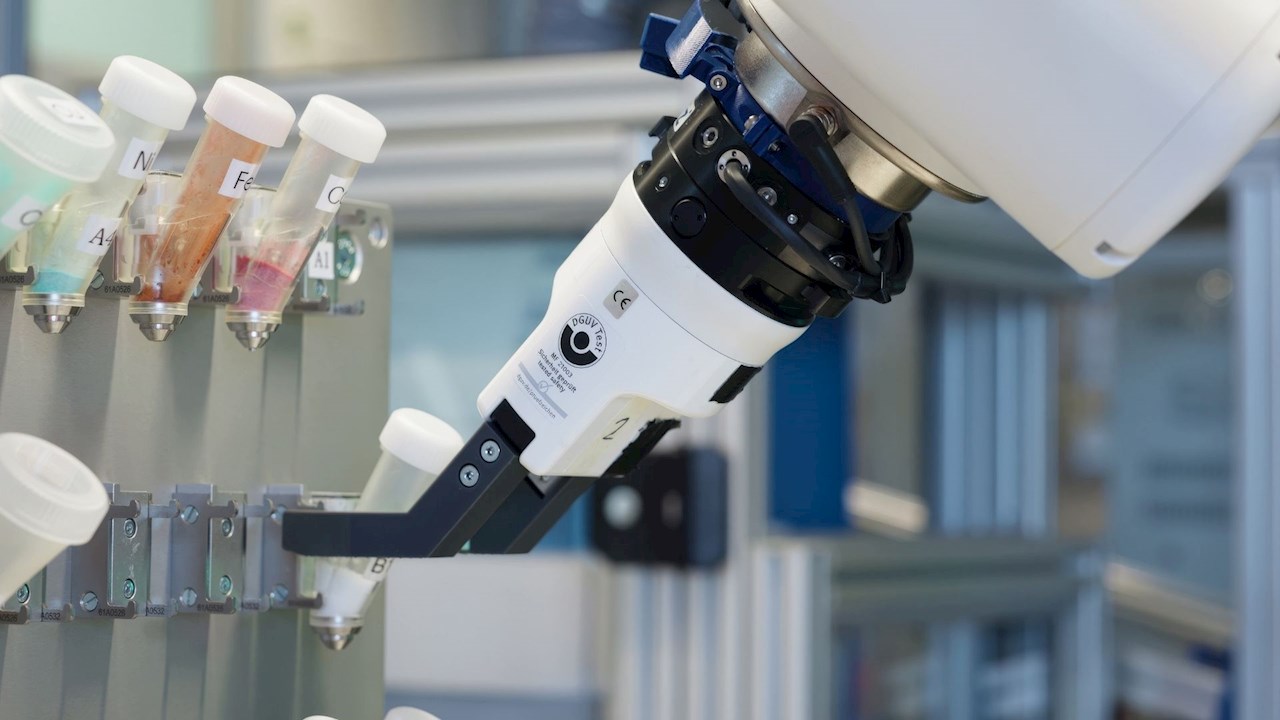
In this setup, the robotic cell at Dunia automates essential preparation steps such as solid dosing, liquid dosing and dispersion, performing them with high reproducibility. These are very common unit operations used across a wide range of materials-science workflows.
“Ultimately, any simulation is only as good as its proximity to reality. Robust datasets are generated through experiments. That’s why it is crucial for us to drastically shorten the path from a model idea to a real measurement,” said Marcus Tze‑Kiat Ng, Co‑Founder of Dunia Innovations GmbH.
Turbocharging material innovation
While they are crucial to the experiment, repetitive manual tasks such as weighing, sample preparation and mixing, take up to three hours per specialist every day. With ABB’s robots, these important steps can instead be automatically completed before the workday begins, allowing specialists to focus on tasks that require human expertise including designing experiments and analyzing data.
“Our goal is to generate maximum insight with minimal experimental effort,” said Marcus Tze‑Kiat Ng.
The results speak for themselves. In one experiment, Dunia achieved their target in 20 cycles using the AI-based automation system. Dunia estimates that exploring the same space using a conventional sequential approach would have required more than 200 iterations.
"Robots are the physical manifestation of AI, and AI’s true value can only be realized when digital intelligence can drive reliable action in the real world," said Jose-Manuel Collados, Business Line Managing Director, Service Robotics at ABB Robotics.
"By combining ABB Robotics' flexible robots with Dunia's AI-driven materials discovery platform, researchers can automate and accelerate the entire Design-Make-Test-Analyze cycle, creating the foundation for AI Self-Driving Labs. This allows more experiments, better data and faster learning, helping bring breakthrough materials from the laboratory to industrial scale more quickly."
The system can also help save costs. In a recent green-hydrogen project, Dunia’s AI-led algorithm was able to identify a material combination to manufacture electrodes that did not require costly metals like platinum and ruthenium. By reducing capital expenses in green and clean projects, Dunia takes the world closer to an economically viable energy transition.
The current robotic cell serves as a blueprint for comprehensive and modular laboratory architecture. As a next step, Dunia plans to physically connect three standardized cells with an autonomous mobile manipulator (AMM), creating a completely automated, end‑to‑end materials‑research line.
And this is only the beginning. In the medium term, Dunia is planning a Gigalab – a data center for materials research. Instead of server clusters, up to 60 automated cells are expected to deliver new, market‑ready material every 30 days.